Summary (Optional)
Prefer audio? Listen to a short neutral overview. Then review full details and sources below.
Quick Summary
- Worked as Chief Counsel in the Alabama Attorney General's Office, advising on major legal cases.
- Has experience in federal government, including at the U.S. Department of Justice and the Senate Judiciary Committee.
- Republican nominee for Alabama Attorney General in 2026. Her campaign is funded by national conservative legal organizations and groups.
Information is based on publicly available sources and is presented for voter education. Review the sources and decide what matters most to you.
Party: Republican
Overview
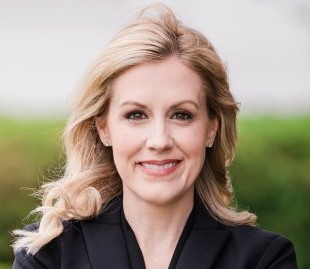
Katherine Robertson is a lawyer running for Alabama Attorney General. She spent years working in the Attorney General's Office and before that worked in the federal government, including at the U.S. Department of Justice and for the Senate Judiciary Committee.
As Chief Counsel in Alabama's Attorney General's Office (from 2017 to 2026), Robertson was the top legal advisor and helped set strategy for major cases. During her tenure, she was central to Alabama's legal challenges against federal rules on education, voting rights, and healthcare policy. She worked on some of the most consequential cases the state has been involved in—including voting rights disputes that reached the Supreme Court and recent efforts to block federal funding for research she disagreed with.
Her 2026 campaign is funded by donations from national conservative legal organizations and groups that don't require public disclosure of all their donors. Supporters of this approach say national legal networks can bring resources and expertise to state races. Critics argue that undisclosed funding can create questions about independence and accountability.
What She Did
Short version: key actions and why they may matter to your vote.
-
Fought Federal Rules Alabama Disagreed With
Action:
As Chief Counsel, Robertson worked on cases where Alabama challenged federal rules about education, vaccine mandates, and federal funding. The state argued it shouldn't have to follow these rules.
Why it matters:
These cases are about power—who gets to make decisions, the federal government or states? If you think states should have more control over their own policies, this shows Robertson's legal approach. -
Defended Congressional District Maps in Court
Action:
Robertson worked on cases where federal judges said Alabama's congressional district maps weren't fair to Black voters. In 2023, a lower court ruled the maps violated voting rights law and required two Black-majority districts. Alabama appealed to the U.S. Supreme Court, which initially upheld the lower court in June 2023. The state then created new maps with only one Black-majority district. A year later, in April 2026, the Supreme Court reversed course with a new ruling that fundamentally changed voting rights law, and in June 2026 allowed Alabama to use its original maps for the 2026 elections.
Why it matters:
This case illustrates the ongoing debate over voting rights, redistricting, and representation. Supporters of Robertson's legal strategy say the state's maps reflect community boundaries and voting patterns. Critics argue that the maps were drawn to dilute Black voters' representation. The Supreme Court's reversal shows how voting rights law itself is disputed—what courts required one year, they allowed the next. -
Challenged Federal School Rules
Action:
Robertson supported Alabama joining a lawsuit against a federal rule affecting schools—specifically rules about school bathrooms, locker rooms, and school sports. Alabama argued the federal rule overstepped federal power.
Why it matters:
This case is about who should make decisions for schools—the federal government or states and local communities. Whether you think federal rules go too far or not far enough in schools will affect how you view Robertson's legal approach. -
Working to Halt Federal Funding for UAB Transgender Health Study
Action:
Robertson's office announced in July 2026 that it is working with the Trump Administration to stop federal funding for a research study at the University of Alabama at Birmingham. The study, originally titled "Assessing and Promoting Vaginal Health for Transgender Men on Testosterone," was funded through the Department of Health and Human Services. UAB said the study was later revised to focus more broadly on sexual health and infection risk, but the Attorney General's Office said it is actively working to cut off the funding.
Why it matters:
This action shows Robertson's approach to healthcare policy. Supporters argue that scrutinizing how federal funds are used is the Attorney General's job and that the office should ensure alignment with state values. Critics argue that the state should not block legitimate research funded by the federal government. This case reflects larger debates about the state's role in medical research and federal funding decisions.
Campaign Notes
Campaign Notes cover major issues, questions, or debates from a candidate's campaign. Inclusion does not mean wrongdoing or misconduct.
-
Campaign Funding from National Legal Organizations
Robertson's campaign received $2.9 million in donations from national conservative legal organizations and groups that don't require public disclosure of all their donors. The three largest sources were First Principles Action ($1.2 million), Frontline Leaders Action ($1.05 million), and Rule of Law Action Fund (approximately $650,000). She said the money came from national conservative legal groups and networks of Republican attorneys general. Her total campaign spending was $5.7 million.
Why it matters:
Campaign funding shapes how voters understand a candidate's independence and connections. Supporters point to Robertson's funding from national legal networks as bringing expertise and resources to state races. Critics argue that undisclosed funding raises questions about who influences a candidate's decisions. How you view this funding approach depends partly on what you think matters more—national legal expertise and resources, or transparency about all funding sources.
Experience
- Chief Counsel, Alabama Attorney General's Office
- Senior Advisor, Alabama Attorney General's Office
- Legislative Counsel, U.S. Senate Judiciary Committee
- U.S. Department of Justice
- Vice President, Alabama Policy Institute
Things to Think About
- Is it better to have an Attorney General who's worked inside the office before, or would you prefer someone new to the role?
- Robertson's legal work focused on Alabama challenging federal rules. Do you think states should push back against federal government decisions, or is that not the job of the Attorney General?
- Campaign funding can come from different sources. How do you think about candidates funded by undisclosed national organizations versus other funding approaches?
Sources
Sources reviewed: Loading...
Source mix: Loading...